

What Documents Do You Need for Probate?
What Documents Do You Need for Probate?
Dealing with the administration of a loved one's estate is rarely straightforward. One of the first questions people ask is: what probate documents do I actually need to pull together? Getting this right from the start can save weeks of delays and prevent unnecessary stress at an already difficult time.
At The Probate Bureau, we help families across Ware, Hertfordshire and the surrounding areas navigate the probate process. If you are unsure where to begin, our probate administration service is here to support you every step of the way.
This guide sets out the key probate documents UK executors and administrators need to gather, whether you are applying for a Grant of Probate or Letters of Administration.
Why Documents Matter in the Probate Process
Before the local probate registry issues a Grant of Probate or Letters of Administration, you must submit a formal application supported by the correct paperwork. The grant is a legal document that gives the named executors or administrators the legal right to manage and distribute someone's estate. Missing or incorrect documents are one of the most common reasons applications are delayed.
It is also worth knowing who can apply. If there is a will, the named executors apply. If there is no will, the closest surviving relatives apply under the rules of intestacy.
The Essential Probate Documents UK Executors Need
The probate documents UK law requires will depend on whether the person died with a will and the nature and value of the estate of the person. Below is an overview of what is typically required.
1. The Original Will (If There Is One)
If the deceased left a will, you will need the original signed Last Will and Testament, including any formal amendments (codicils). Photocopies are not accepted by the Probate Registry.
If you cannot locate the original will, it may be held by a legal professional, bank, or will storage service. Always check with the deceased's bank and any local solicitors they may have used.
2. The Death Certificate
A certified copy of the death certificate is required for the probate application. You will likely need multiple copies, as banks, financial institutions, and HMRC will each want their own. When registering the death, it is worth ordering at least five certified copies at the time.
The death certificate is one of the most important documents in the estate administration process and underpins almost every step that follows.
3. The Probate Application Form (PA1P or PA1A)
To apply for a Grant of Representation, complete the PA1P (with a will) or PA1A (without a will) along with the relevant inheritance tax form.
<>
| Form | When to Use |
|---|---|
| PA1P | When the deceased left a valid will |
| PA1A | When there is no will (intestacy) |
Both forms ask for details about the deceased, the estate, and the applicant. The PA1 form can be filled out online or downloaded for postal submission. Errors can result in the application being returned, so it is worth taking your time to complete the IHT form carefully alongside the probate form. When submitting, you will need to include the original will (if there is one), the death certificate, and the application fee.
4. Inheritance Tax Forms
Even if no inheritance tax is due, you must complete and submit the relevant HM Revenue and Customs form to declare the value of the estate before applying online or by post for probate. The main forms are:
- IHT205 (or IHT207 for overseas domiciles) - for smaller or simpler estates below the inheritance tax threshold
- IHT400 - for larger or more complex estates where tax may be owed
Probate and inheritance tax are closely linked. You must declare the estate's value and, where tax is due, pay inheritance tax before a grant can be issued. If you are unsure how much inheritance tax is owed, the inheritance tax helpline can provide guidance. Income tax obligations must also be settled before the estate can be distributed. Inheritance tax must be reported to HMRC within one year of the date of death, and payment is due by the end of the sixth month after death.
If you are unsure which form applies to your situation, speak to our team before submitting anything.
5. A Schedule of the Deceased's Assets and Liabilities
Before completing the inheritance tax forms, you need to value the estate carefully. This means writing to all financial institutions, pension providers, and relevant organisations to obtain an estimated value of property, money and possessions as at the date of death.
Assets to include:
- Bank and building society accounts
- Savings and investments, including shares or bonds not jointly owned
- Property (a professional valuation is usually required)
- Owned land
- Vehicles, jewellery, and household contents
- Life insurance policies not written in trust
- Any money owed to the deceased
Some assets automatically passes to a surviving partner outside of the estate, such as jointly owned property, and may not require probate. Some assets may be held in joint names, which can affect whether they are included in the deceased's estate for probate purposes. During the administration period, any income received by the estate must be recorded in the estate accounts. Liabilities such as mortgages owed to a mortgage company, loans, credit cards, and bills from utility companies must also be recorded, as these are deducted from the estate's value. Make sure there is enough money in the estate to settle all debts before distributing all the money to beneficiaries.
Additional Probate Documents UK Executors May Need
Depending on the circumstances of the estate, you may also need to gather:
- Marriage or civil partnership certificate, relevant for spousal and civil partner exemptions and identifying next of kin
- Divorce decrees, if the deceased was previously married this may affect how the estate is distributed
- Property title deeds or Land Registry documents to confirm ownership and any charges against the property
- Pension and life insurance policy documents; check whether each policy pays directly to a named beneficiary or forms part of the estate
- Share certificates, if the deceased held shares directly rather than through a stockbroker
In certain circumstances, such as when estates left are complex or involve overseas assets, a surviving partner or surviving relatives may need additional legal support. Our team in Ware, Hertfordshire has experience handling estates of all sizes and complexities, including those in Hertford, Bishops Stortford, Stevenage, and Harlow.
Find out more about how we approach complex estate matters on our Wills, Trusts and Powers of Attorney service page.
Applying for Probate Online: What to Prepare
Bank Accounts, Life Insurance Policies and Other Assets in the Estate
Applying online is an increasingly popular way to start the probate process. Before you begin, make sure you have the original will (if there is one), an official copy of the death certificate, and a summary of property, money, and possessions as at the date of death. You can apply directly through the probate application service.
The paper application route is also available if you prefer to submit by postal application. The application fee is currently £300 for estates left valued at £5,000 or more. Estates valued below this threshold do not incur a fee. After submitting your application, the local probate registry may request additional information, so keep all paperwork organised and accessible. The process can take several weeks depending on the complexity of the estate, and bank holidays can cause additional delays.
If you are on a low income or facing financial difficulties, you may be eligible for a reduced fee or full exemption from the probate application fee. It is worth checking your eligibility before submitting. A legal professional can advise you on this if you are unsure.
Probate specialists may charge separately for their services, with fees ranging from a fixed fee for straightforward estates left to a percentage of the estimated value of the estate, typically between 1% and 5% plus VAT, for more complex cases.
If you would like support with your online application, our team is happy to help.
Frequently Asked Questions About Probate Documents
What probate documents do I need if there is no will?
If there is no will, the estate is dealt with under the rules of intestacy and you will need to apply for Letters of Administration. The core documents needed are the death certificate, the PA1A application form, and the relevant inheritance tax forms. You may also need to confirm your relationship to the deceased via a birth or marriage certificate.
Do I need a solicitor to apply for probate?
You do not legally need a solicitor to apply for probate in England and Wales. However, given the volume of paperwork and the legal and financial consequences of errors, many families choose to use a specialist. At The Probate Bureau, we offer a fixed-fee service that takes the pressure off you during an already difficult time.
How long does it take to gather probate documents?
Gathering all the required probate documents UK executors need can take anywhere from a few weeks to several months. Financial institutions often take time to respond to valuation requests, and property valuations must be carried out by a qualified surveyor. Starting the process as soon as possible after registering the death is always advisable.
Getting Help With Your Probate Application
Understanding which probate documents UK law requires is only the first step. Completing the forms accurately, submitting them to the correct authority, and following up on queries from HMRC or the Probate Registry all take time and careful attention.
Our experienced team at The Probate Bureau is here to help. We work with families across Ware, Hertfordshire and the wider region, providing fixed-fee probate services with no hidden costs. You can read more about timescales in our guide on how long probate takes in the UK, and find out about fees in our 2026 probate cost guide.
Ready to get started? Contact The Probate Bureau today for a free, no-obligation conversation with one of our specialists.
Back To Blog
Share This Post


Recent posts
- What Documents Do You Need for Probate? By Probate Bureau , 26/05/2026
- Can You Access Bank Accounts Before Probate? By Probate Bereau , 26/05/2026
- Do You Need Probate to Sell a House in the UK? By Probate Bereau , 26/05/2026
2015 Archive
2016 Archive
2018 Archive
2019 Archive
2020 Archive
2023 Archive
- July 10 posts
0 Archive
- December 1 posts
Blog Categories
Find your way through the probate maze
Click here to follow our step-by–step probate process guide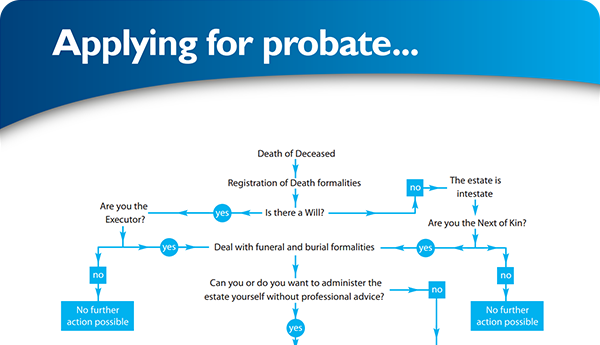
Testimonials
Excellent service, everything went very smoothly. Like to thank Ann and her team.... read more
Good & Reliable service, always kept up to date with what was happening. Value for money.... read more
Latest Tweet
Follow @ProbateBureau


Contact Us
0800 028 2837 info@probatebureau.comTHE PROBATE BUREAU
3 Crane Mead Business Park
Crane Mead
Ware
Hertfordshire
SG12 9PZ
×